
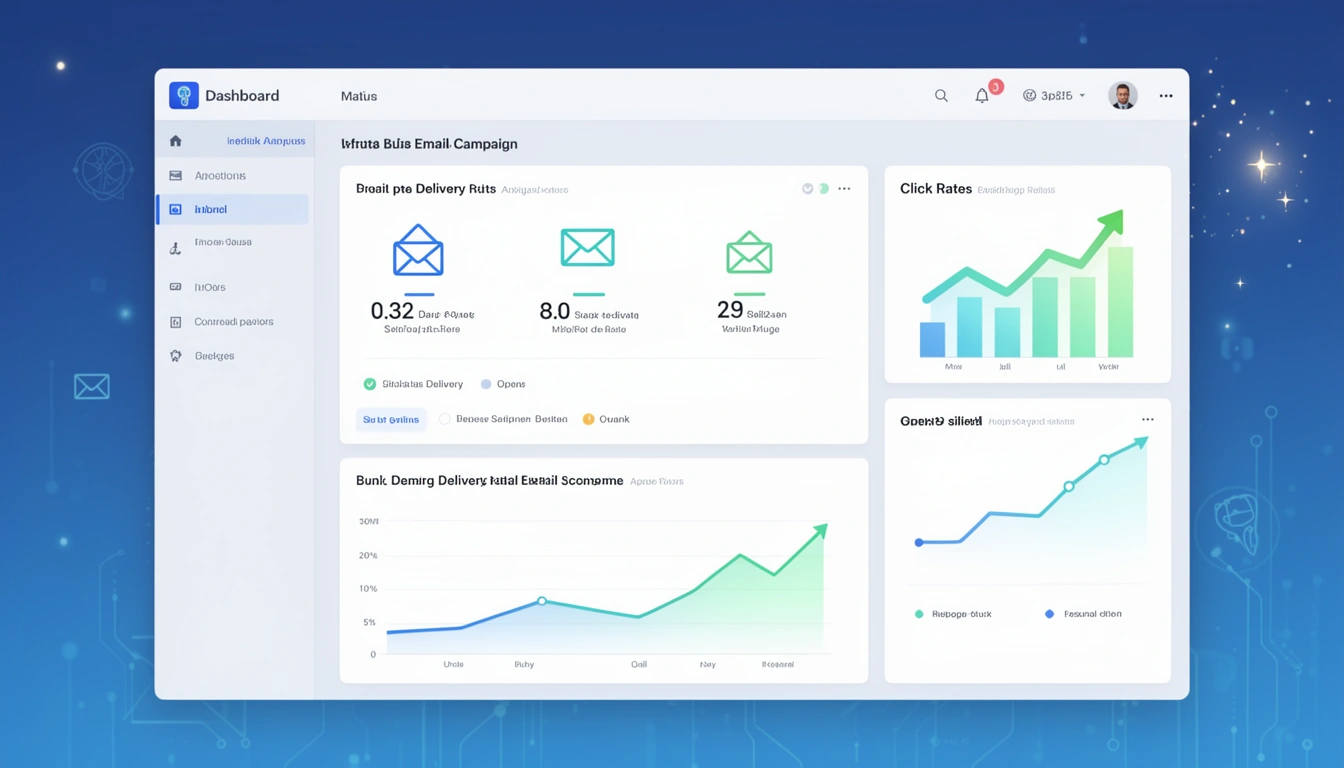
Bulk email services have become essential infrastructure for businesses of all sizes in 2026. Whether you're sending newsletters to thousands of subscribers, running automated drip campaigns, or managing transactional emails, choosing the right bulk email service can make or break your marketing strategy.
In this comprehensive guide, we'll explore everything you need to know about bulk email services, from pricing models to deliverability, and help you make an informed decision for your business.
What Is a Bulk Email Service?
A bulk email service is a platform that enables businesses to send large volumes of emails to multiple recipients simultaneously. Unlike standard email clients like Gmail or Outlook (which limit daily sends), bulk email services are designed to handle thousands or even millions of emails while maintaining high deliverability rates.
These services provide:
- Scalable infrastructure: Send from hundreds to millions of emails without performance issues
- Deliverability optimization: Built-in SPF, DKIM, and DMARC authentication to avoid spam folders
- Analytics and tracking: Real-time insights into opens, clicks, bounces, and conversions
- Template management: Pre-built designs and drag-and-drop editors for professional emails
- Contact management: Organize and segment your email lists efficiently
- Automation capabilities: Set up triggered campaigns and drip sequences
Types of Bulk Email Services
1. Marketing Email Platforms
These are designed for promotional campaigns, newsletters, and marketing automation. They typically include visual editors, A/B testing, and advanced segmentation features. Perfect for e-commerce businesses, content creators, and marketing teams.
2. Transactional Email Services
Built for sending automated, triggered emails like password resets, order confirmations, and shipping notifications. These prioritize speed and reliability over design features, often providing simple APIs for developer integration.
3. Hybrid Platforms
Modern bulk email services like Bokimo AI combine both marketing and transactional capabilities in one platform. This approach gives businesses flexibility to manage all email communications from a single dashboard while benefiting from unified analytics and cost savings.
Key Features to Look for in 2026
AI-Powered Email Creation
The game has changed dramatically in 2026. Leading bulk email services now incorporate AI to help you create professional email templates in seconds. Instead of spending hours in design tools, you simply describe what you need, and AI generates conversion-optimized templates instantly.
Platforms with advanced AI features can analyze your brand guidelines, understand your audience, and create personalized email content that drives engagement.
Superior Deliverability Rates
All the fancy features in the world mean nothing if your emails land in spam folders. Look for services that offer:
- 99%+ inbox placement rates
- Automatic authentication setup (SPF, DKIM, DMARC)
- Dedicated IP options for high-volume senders
- Real-time bounce and complaint monitoring
- Reputation management tools
Scalable Infrastructure
Your bulk email service should grow with your business. Check if the platform can handle sudden traffic spikes, supports multi-region sending for global reach, and maintains performance even during peak sending times.
Comprehensive Analytics
Data-driven decision making requires robust analytics. Essential metrics include:
- Open rates and click-through rates
- Conversion tracking with revenue attribution
- Geographic and device-based insights
- Engagement trends over time
- List growth and churn rates
Automation and Workflows
In 2026, manual email sending is obsolete. Your bulk email service should enable:
- Welcome series for new subscribers
- Abandoned cart recovery sequences
- Re-engagement campaigns for inactive users
- Birthday and anniversary emails
- Behavioral triggers based on user actions
Bulk Email Service Pricing Models Explained
Understanding pricing is crucial for choosing the right bulk email service. Here are the most common models in 2026:
Subscriber-Based Pricing
Traditional platforms charge based on your total number of contacts, regardless of how many emails you actually send. For example, you might pay $50/month for up to 5,000 subscribers, even if you only send one campaign.
Pros: Predictable monthly costs, unlimited sends
Cons: Expensive as your list grows, you pay for inactive subscribers
Volume-Based Pricing
You pay based on the number of emails you send, not the size of your list. This model has become increasingly popular because it's more cost-effective for businesses with large lists but infrequent sending patterns.
Pros: Only pay for what you use, unlimited contacts
Cons: Costs can vary month-to-month
AWS SES-Powered Pricing
The most cost-effective option in 2026 leverages Amazon Web Services Simple Email Service (AWS SES) infrastructure. This approach can reduce costs by up to 99% compared to traditional providers.
For context, platforms using AWS SES typically charge around $1 per 5,000 emails, while legacy providers like Mailchimp charge $75+ for just 10,000 emails. That's a massive difference for high-volume senders.
Cost Comparison: Real Numbers
Let's look at actual pricing for sending 50,000 emails per month:
- Traditional Provider A: $350-$450/month (subscriber-based)
- Traditional Provider B: $280-$380/month (subscriber-based)
- AWS SES-Based Service: $10 + platform fee (volume-based)
For businesses sending 500,000 emails monthly, the savings become even more dramatic potentially $3,000+ per month compared to legacy platforms.
You can see detailed pricing breakdowns on the Bokimo AI pricing page to compare different volume tiers.
Deliverability: The Make-or-Break Factor
Even the cheapest bulk email service is worthless if your emails don't reach inboxes. Deliverability depends on several factors:
Email Authentication
Your bulk email service must configure SPF, DKIM, and DMARC records correctly. These authentication protocols verify that emails are genuinely from your domain, significantly improving inbox placement.
Sender Reputation
Email providers like Gmail and Outlook track sender reputation scores. Bulk email services with shared IP pools can be problematic if other users engage in spammy behavior. Look for platforms that:
- Actively monitor and maintain IP reputation
- Offer dedicated IPs for high-volume senders
- Automatically remove problematic accounts from shared pools
Content Quality
Spam filters analyze email content for red flags. Your bulk email service should provide:
- Spam score checking before sending
- Content suggestions to improve deliverability
- Automatic suppression of bounced and complained addresses
Engagement Metrics
Email providers increasingly use engagement signals (opens, clicks, replies) to determine inbox placement. Services with built-in engagement optimization tools help you send at the right time, to the right segments, with the right content.
How to Choose the Right Bulk Email Service
Step 1: Define Your Sending Volume
Calculate your monthly email volume including:
- Newsletter sends
- Promotional campaigns
- Transactional emails (confirmations, receipts, etc.)
- Automated sequences
This helps you understand which pricing model makes sense and whether you need enterprise-level infrastructure.
Step 2: Assess Your Technical Requirements
Developers need different features than marketing teams:
- For developers: Clean API documentation, SDKs in your preferred language, webhook support
- For marketers: Drag-and-drop editors, pre-built templates, visual automation builders
- For agencies: Multi-client management, white-label options, team collaboration tools
Step 3: Evaluate Integration Needs
Your bulk email service should integrate seamlessly with your existing stack:
- CRM systems (Salesforce, HubSpot, Pipedrive)
- E-commerce platforms (Shopify, WooCommerce, Magento)
- Analytics tools (Google Analytics, Mixpanel)
- Customer support platforms (Zendesk, Intercom)
Check the platform's available integrations before committing.
Step 4: Test Deliverability and Performance
Most bulk email services offer free trials. Use this period to:
- Send test campaigns to seed lists
- Check inbox placement across Gmail, Outlook, Yahoo
- Measure actual delivery speed
- Test the support team's responsiveness
Step 5: Calculate Total Cost of Ownership
Don't just look at base pricing. Consider:
- Overage fees for exceeding plan limits
- Charges for additional features (A/B testing, automation, etc.)
- Setup fees or onboarding costs
- Time saved with AI features and automation
Common Bulk Email Service Mistakes to Avoid
Mistake #1: Buying Solely on Price
The cheapest option isn't always the best value. A service with 75% deliverability at $5/month is far worse than one with 99% deliverability at $15/month. Factor in the revenue impact of emails that actually reach inboxes.
Mistake #2: Ignoring List Hygiene
No bulk email service can overcome a poor-quality email list. Regularly clean your contacts by:
- Removing hard bounces immediately
- Re-engaging or removing inactive subscribers
- Using double opt-in for new signups
- Running periodic email validation
Mistake #3: Not Testing Before Scaling
Start with small campaigns to establish sender reputation before sending to your entire list. Suddenly sending 100,000 emails on a new platform can trigger spam filters and damage deliverability.
Mistake #4: Overlooking Compliance
GDPR, CAN-SPAM, and CCPA regulations require specific email practices. Your bulk email service should provide:
- Easy unsubscribe mechanisms
- Consent tracking and documentation
- Data processing agreements
- Geographic data residency options
Bulk Email Service Use Cases by Industry
E-commerce
Online retailers send massive email volumes including abandoned cart sequences, product recommendations, sale announcements, and order confirmations. E-commerce businesses benefit most from services with strong e-commerce integrations and dynamic content capabilities.
Key features needed: Product feeds, purchase-based segmentation, revenue tracking, SMS integration
SaaS Companies
Software businesses rely on both transactional emails (password resets, notifications) and marketing emails (feature announcements, onboarding sequences). They need developer-friendly APIs and behavior-based automation.
Key features needed: API access, webhook triggers, user activity tracking, in-app message coordination
Agencies
Marketing agencies managing multiple client accounts need multi-tenant capabilities, white-label options, and client reporting dashboards. Cost efficiency is critical since agencies often operate on tight margins.
Key features needed: Client management, role-based permissions, white-label branding, consolidated billing
Publishers and Media
Newsletter publishers send frequent content updates to large subscriber bases. They prioritize deliverability, subscriber growth tools, and engagement analytics.
Key features needed: RSS-to-email, subscriber forms, engagement scoring, content personalization
The Future of Bulk Email Services
As we progress through 2026, several trends are reshaping bulk email services:
Advanced AI Integration
Beyond template generation, AI is now optimizing send times, predicting customer behavior, writing subject lines, and personalizing content at scale. Services that effectively leverage AI are seeing 2-3x higher engagement rates.
Hyper-Personalization
Generic batch-and-blast campaigns are dying. Modern bulk email services enable 1:1 personalization even when sending to millions, using dynamic content blocks, predictive recommendations, and real-time data integration.
Cross-Channel Orchestration
Email doesn't exist in isolation. Leading platforms now coordinate email with SMS, push notifications, and in-app messages to create cohesive customer journeys across channels.
Privacy-First Features
With iOS Mail Privacy Protection and similar initiatives limiting traditional tracking, bulk email services are developing privacy-compliant analytics that respect user preferences while still providing actionable insights.
Getting Started with Bulk Email Services
Ready to launch your bulk email program? Follow this checklist:
- Domain Setup: Configure a dedicated sending domain (like mail.yourbusiness.com)
- Authentication: Set up SPF, DKIM, and DMARC records (your provider should guide you)
- Import Contacts: Clean and import your email list with proper consent documentation
- Create Templates: Design or generate email templates aligned with your brand
- Test Campaign: Send to a small segment first to verify deliverability and design
- Monitor Results: Track metrics and optimize based on performance data
- Scale Gradually: Increase volume slowly to build sender reputation
Why Modern Businesses Choose AI-Powered Bulk Email Services
Traditional bulk email services served their purpose well for decades, but the landscape has fundamentally changed. Businesses in 2026 need platforms that combine:
- Extreme cost efficiency: Leveraging cloud infrastructure to eliminate markup
- AI assistance: Automating creative work and optimization tasks
- Developer experience: Clean APIs for seamless integration
- Marketing features: Visual builders and automation for non-technical users
- Enterprise reliability: 99.9%+ uptime and deliverability guarantees
This is exactly what platforms like Bokimo AI deliver cutting-edge technology at a fraction of traditional costs, without sacrificing features or reliability.
Conclusion
Choosing the right bulk email service is one of the most important decisions for your marketing stack. The platform you select will directly impact your email deliverability, marketing costs, team productivity, and ultimately, your revenue.
In 2026, the winning formula combines AWS SES infrastructure for cost efficiency, AI-powered features for productivity, and robust deliverability optimization for results. Whether you're sending 5,000 or 5 million emails per month, modern bulk email services can deliver exceptional performance at a fraction of what you might be paying now.
Take advantage of free trials to test different platforms, measure actual deliverability rates, and calculate your true costs. The right bulk email service will pay for itself many times over through improved engagement, reduced expenses, and time saved.
Ready to experience the future of bulk email? Start sending smarter, faster, and cheaper with AI-powered email marketing that scales with your business.