

Transactional emails trigger when a user does something resets a password, buys a shirt, requests an invoice. Marketing emails go out to lists to sell things. One facilitates a transaction the user started. The other tries to start one.
The distinction sounds simple. It isn't. Confusing the two leads to deliverability problems, compliance fines, and users who can't find their receipt because it landed in spam. Here’s how to keep them straight, what the law actually requires, and how to use both effectively in 2026.
What Transactional Emails Actually Are
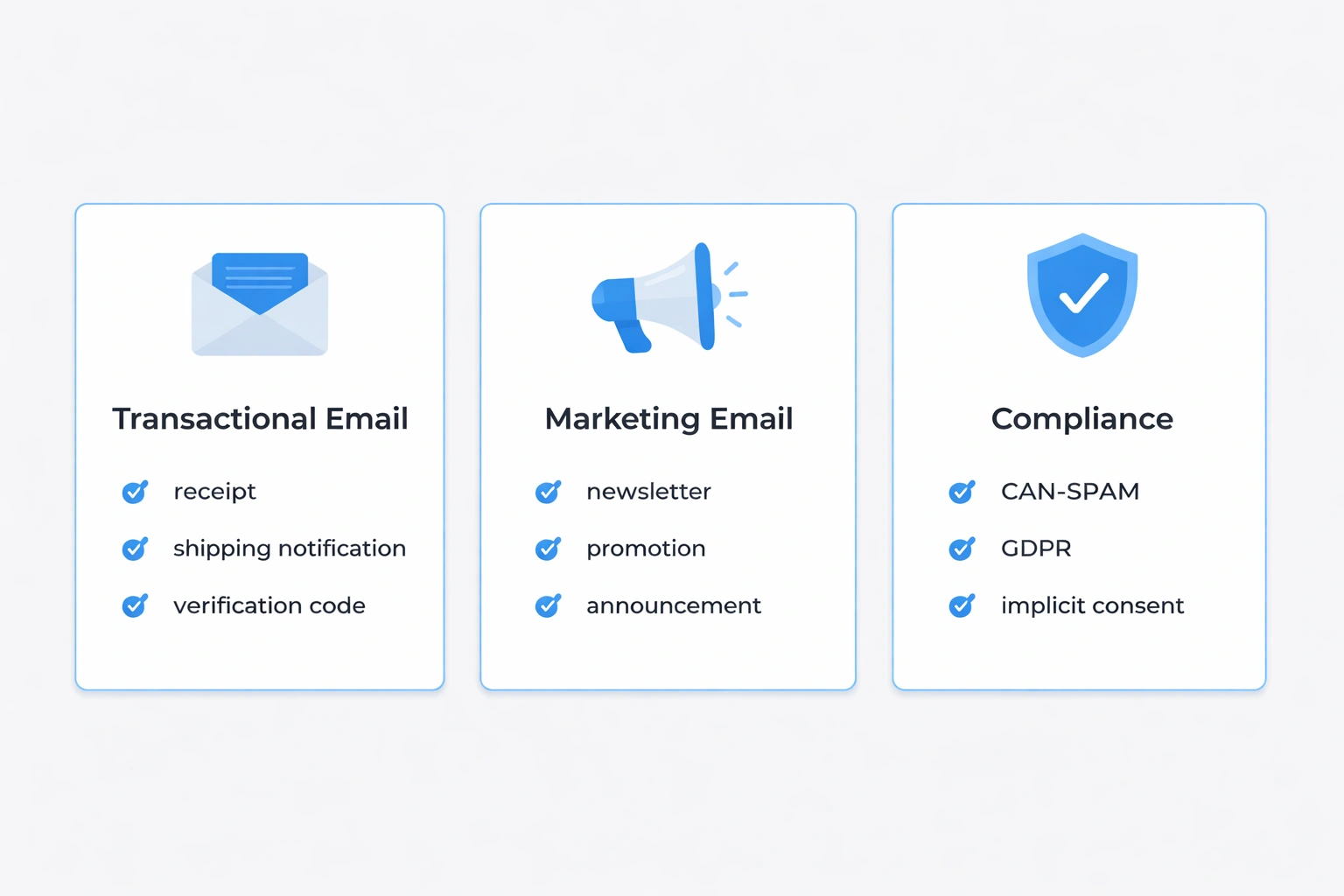
A transactional email sends automatically after a user action. It delivers the information needed to finish that action: purchase receipts, shipping notifications, verification codes, billing statements. The recipient gets it because they did something first, not because they joined a list.
Expectation is the defining factor. When someone resets a password, they wait for that email. If it doesn't arrive in seconds, they think your site is broken. Because the user initiated the action, you have implicit consent no extra opt-in checkbox needed under CAN-SPAM or GDPR.
These messages reach inboxes more reliably because ISPs know what they are. Gmail and Outlook filter them less aggressively. Open rates reflect that: 80-85% for transactional emails compared to 15-25% for marketing.
But you can't just turn receipts into ads. The message has to relate primarily to the triggering action. A small promotional footer? Usually fine. If half the email is marketing, you violate anti-spam laws and damage your sender reputation.
How Marketing Emails Differ
Marketing emails promote your brand, products, or content to people who explicitly opted in. Newsletters, product launches, discount codes, webinar invites. These don't respond to a specific user action. You send them on your schedule to hit your goals.
Explicit consent is the legal foundation. GDPR requires an affirmative opt-in (no pre-checked boxes). CAN-SPAM requires clear identification of commercial intent and a working unsubscribe link. This limits your initial reach compared to transactional sends.
ISPs filter marketing emails more strictly. They assume recipients might not want them. Algorithms learn from engagement opens, clicks, replies, deletes. If people ignore your emails, providers route future campaigns to spam.
The value here is revenue and relationships over time. Marketing emails nurture prospects, recover abandoned carts, announce sales, cross-sell. Integrated with email automation workflows, they create systematic touchpoints that guide subscribers toward a purchase.
Legal Requirements by Email Type
Transactional emails get regulatory exceptions because they are necessary. CAN-SPAM allows them without unsubscribe links if they stick to transaction-related information. Add too much promotion and they become "commercial electronic mail messages" requiring full compliance.
GDPR treats transactional emails as "legitimate interest" processing. No consent checkbox needed to deliver a service the user asked for. But embed a marketing section and you void that exemption. You'd need separate consent.
Marketing emails need the full compliance stack:
- Clear sender identification and a physical postal address
- Subject lines that don't mislead
- Visible unsubscribe links (processed within 10 days for CAN-SPAM, immediately for GDPR)
- Consent records showing how and when subscribers opted in
- Suppression lists honored across all campaigns
Penalties are severe. GDPR fines hit €20 million or 4% of global revenue. CAN-SPAM violations cost up to $51,744 per email. Beyond fines, compliance failures wreck sender reputation, which blocks all your emails transactional included. Platforms like Bokimo AI build these safeguards into the infrastructure, handling suppression lists and headers automatically so you don't have to think about it.
Deliverability Differences That Matter
Transactional emails land in inboxes because ISPs recognize the pattern. Authentication protocols SPF, DKIM, DMARC carry more weight when combined with transactional behavior. ISPs know password resets almost never get marked as spam. That builds reputation.
Use dedicated IP addresses or domains for transactional sends if you can. If a marketing blast generates spam complaints, those negatives shouldn't touch your order confirmations. This separation keeps critical messages at 95%+ delivery rates even when marketing performance fluctuates.
Marketing deliverability requires constant reputation management. ISPs track what percentage of recipients open, click, or move emails to folders versus deleting them or marking them as spam. Low engagement signals unwanted mail. Future campaigns go to spam.
Warming schedules prevent issues when launching new email marketing domains or IPs. You increase volume gradually over 4-6 weeks to establish reputation. Transactional emails usually bypass this because low volume and high engagement create trust naturally.
Technical priorities differ. For transactional, speed matters most deliver within 60 seconds using reliable SMTP infrastructure. For marketing, prioritize targeting and personalization to boost engagement signals, as detailed in email deliverability best practices.
Strategic Uses for Each Email Type
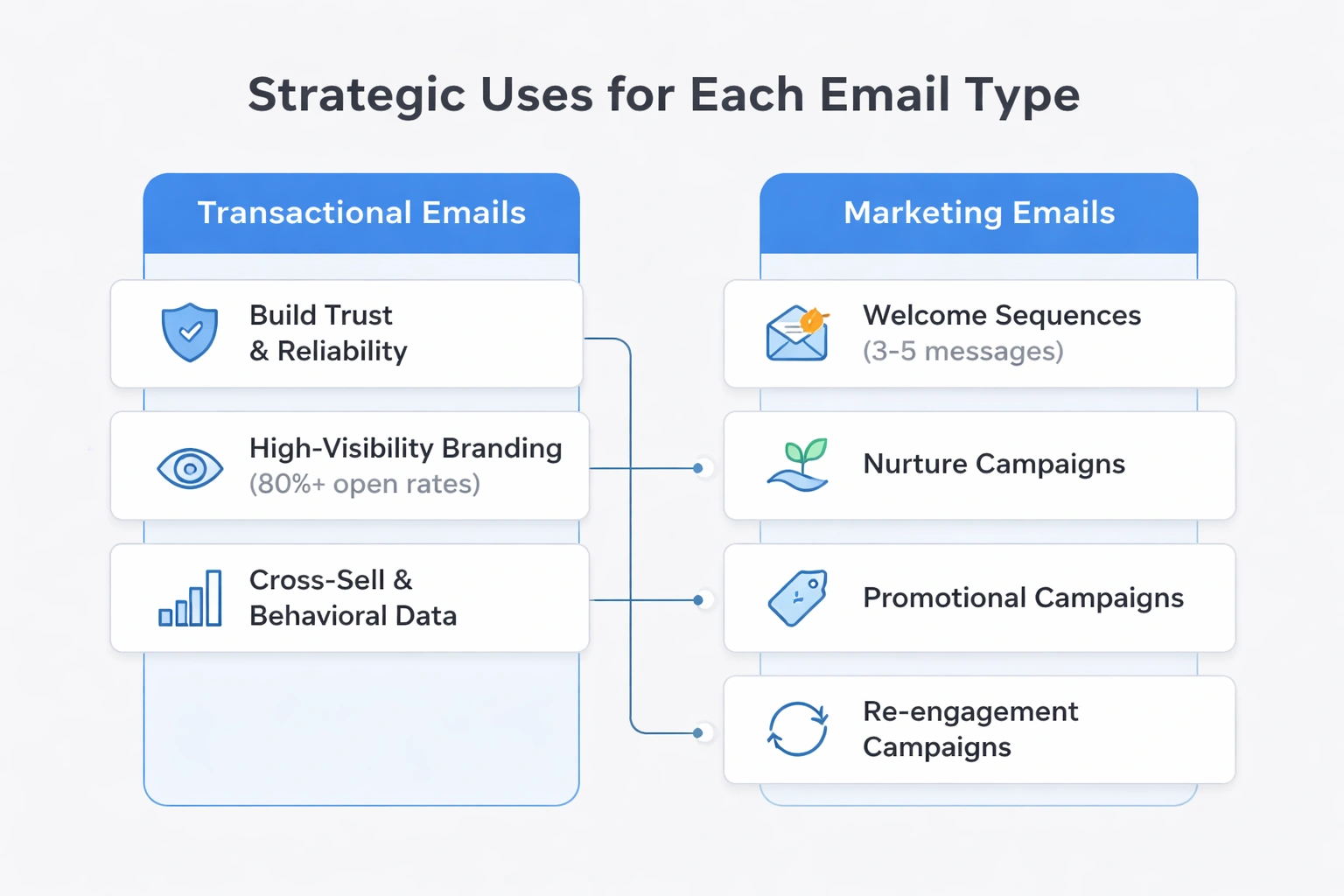
Transactional emails do more than deliver information. They build trust through reliability arriving when expected signals a competent brand. They offer high-visibility branding (80%+ open rates guarantee exposure). They create cross-sell moments when customers are most engaged. They generate behavioral data.
Marketing emails drive revenue through specific campaign types:
- Welcome sequences introduce new subscribers across 3-5 messages
- Nurture campaigns educate prospects before pitching
- Promotional campaigns announce discounts and launches
- Re-engagement campaigns win back inactive subscribers
- Post-purchase sequences gather reviews and suggest related products
The power comes from combining them. A customer gets an order confirmation (high trust). Three days later, they enter a marketing sequence asking for feedback and offering a discount. The transactional email primes them for the marketing message.
E-commerce businesses see this clearly. Abandoned cart emails blur the line triggered by behavior but promoting a purchase. Treat them as marketing messages requiring consent and unsubscribe options, while optimizing for that high-intent context.
SaaS companies use transactional emails for onboarding account setup confirmations, feature activations, usage milestones. These guide users toward value and reduce churn. Parallel marketing campaigns educate users about advanced features and share success stories.
Infrastructure and Technical Setup
Separate infrastructure protects both channels. Use dedicated IPs for transactional sends if you exceed 100,000 messages monthly. This isolates critical messages from marketing reputation shifts.
Subdomains provide separation even on shared IPs. Send transactional emails from transactional.yourdomain.com and marketing from mail.yourdomain.com. Independent reputation tracking keeps your root domain brand-associated.
Authentication urgency differs. For transactional, configure SPF, DKIM, and DMARC before sending anything failures on password resets create immediate user friction. For marketing, implement authentication during setup but prioritize list quality over immediate DMARC rejection policies.
API versus SMTP depends on needs. Transactional emails often use APIs like those offered through bulk email services for programmatic sending with tracking. Marketing campaigns benefit from platforms with builders, segmentation, and analytics.
Database architecture must separate the two. Store transactional logs separately from marketing records. Keep transactional logs longer for legal reasons. Marketing lists need consent tracking, unsubscribe timestamps, and engagement scores.
Template systems should distinguish between them. Transactional templates prioritize clarity and mobile responsiveness. Marketing templates use design features that engage rich imagery, multiple CTAs, storytelling.
Design and Content Considerations
Transactional design serves clarity. Recipients open these messages looking for specific information order totals, tracking numbers, reset links. Surface those details immediately. Use tables for line items, prominent buttons for actions, minimal navigation.
Personalization in transactional emails comes from transaction data, not segments. Include order numbers, product names, addresses details confirming the system processed the action. Dynamic blocks can show purchase history without becoming promotional.
Marketing design optimizes for engagement. Hero images set a mood. Whitespace guides attention to CTAs. Platforms like Bokimo AI use AI-powered design tools to generate layouts that balance aesthetics with scannability.
Copy length diverges. Transactional emails stay short state what happened, provide details, specify any action. Marketing emails use longer copy to build desire and tell stories, but must remain scannable.
CTA strategy reveals the core difference. Transactional emails have one functional button: "View Order," "Confirm Email." Marketing emails often test multiple CTAs linking to different products.
Subject lines reflect this split. Transactional subjects state facts: "Your order #12345 has shipped." Marketing subjects create curiosity or urgency: "Last chance: 40% off ends tonight."
Metrics and Performance Analysis
Transactional metrics focus on technical delivery, not engagement. Watch these:
- Delivery rate: Should exceed 99%. Failed sends break experiences.
- Time-to-inbox: Measure seconds from trigger to receipt. Delays beyond 60 seconds need investigation.
- Authentication pass rate: SPF, DKIM, DMARC must show 100% pass rates.
- API error rate: Track failed send requests indicating integration issues.
Open rates matter less here. A password reset with a 45% open rate isn't failing 55% of users likely reset their password directly through the website.
Marketing performance demands engagement analysis:
- Delivery rate: Target 95%+.
- Open rate: Benchmark 15-25%.
- Click-through rate: Measures content relevance.
- Conversion rate: Tracks revenue or leads.
- Unsubscribe rate: Watch for spikes.
- Spam complaint rate: Keep below 0.1%.
Revenue per email sent (RPE) is the ultimate marketing metric. Divide campaign-attributed revenue by total sends. E-commerce might see $0.10-$0.50 RPE; B2B SaaS often sees $2-$5+ due to higher lifetime values.
A/B testing approaches differ. Test transactional emails for technical reliability and design visibility, but avoid frequent changes that confuse users. Marketing emails benefit from aggressive testing of subject lines, send times, and offers.
Cohort analysis shows how the types interact. Compare conversion rates between users who only receive transactional emails versus those in marketing sequences. This quantifies the revenue impact of your email advertising.
Common Mistakes and How to Avoid Them
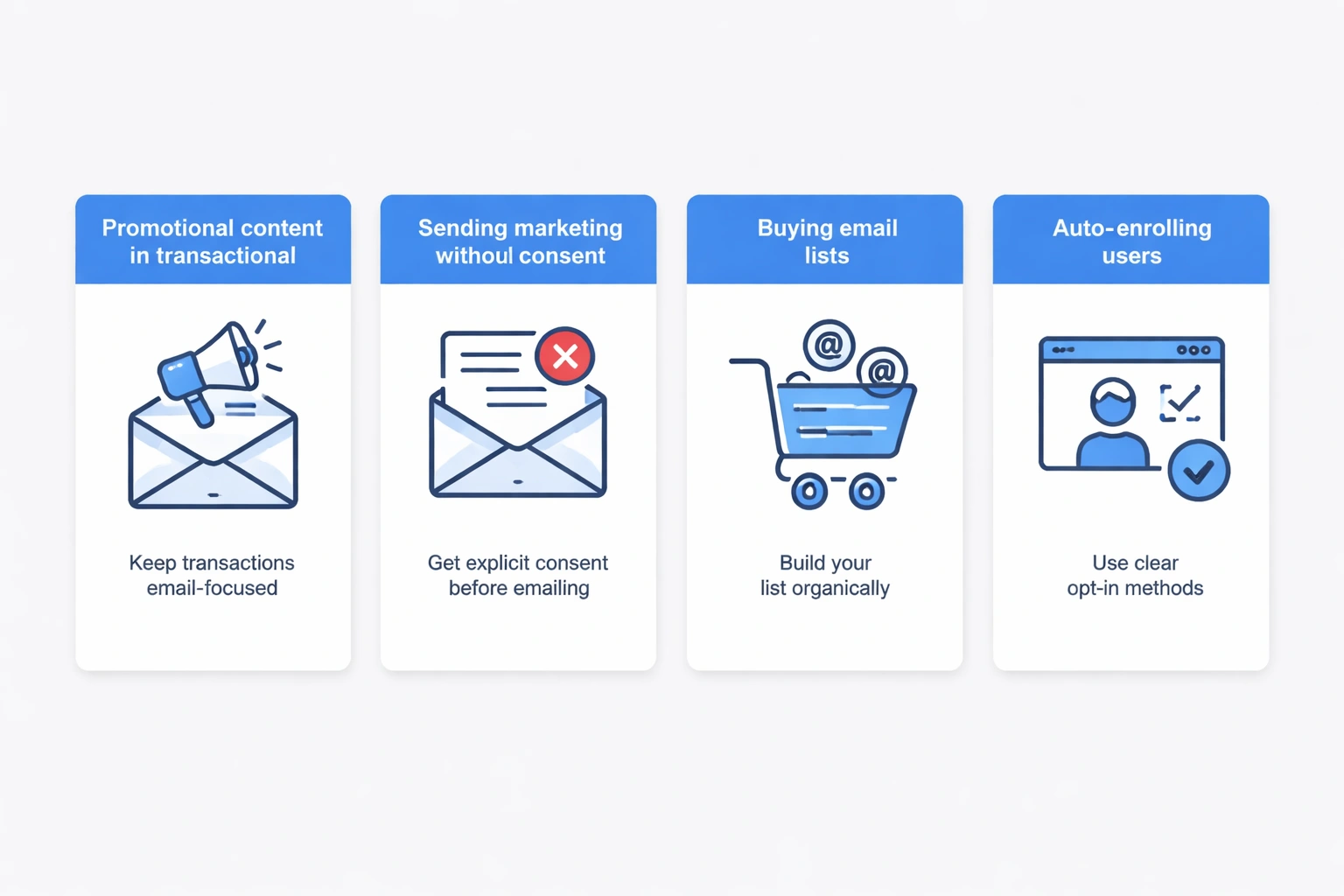
Putting promotional content in transactional emails causes the most damage. It creates legal risk and hurts deliverability. If a shipping confirmation is half product recommendations, it becomes a marketing message requiring consent. Keep promotions to small footers.
Sending marketing emails without consent generates spam complaints that damage reputation for all your emails. Don't buy lists or auto-enroll users based on transactions. Build lists through website signup forms, content downloads, and checkout opt-ins.
Using shared infrastructure creates vulnerability. Marketing spam complaints hurt your IP reputation, dragging down transactional delivery. Implement domain separation at minimum; use dedicated IPs if volume allows.
Neglecting transactional design wastes high-engagement opportunities. These are your most-opened communications. Thoughtful design reinforces professionalism. Ensure mobile optimization and clear hierarchy.
Over-mailing marketing campaigns drives list fatigue. Implement frequency caps and preference centers. Use re-engagement campaigns to identify disengaged contacts before they mark you as spam. Tools for email automation help manage frequency.
Ignoring mobile optimization hurts transactional sends most. Users often need immediate access on their phones. Test templates on iOS Mail, Gmail mobile, Outlook mobile. Use single-column layouts, 14px+ fonts, and buttons larger than 44x44 pixels.
Platform Requirements for Both Types
Solid platforms handle both types through unified infrastructure while maintaining separation.
For transactional emails:
- Real-time API with sub-60-second delivery
- Event webhooks reporting delivery and engagement
- Template management with dynamic variables
- Automatic retry logic
- Dedicated IP options
For marketing emails:
- Drag-and-drop builders or template libraries
- List segmentation and management
- A/B testing frameworks
- Scheduling and timezone optimization
- Analytics dashboards with revenue tracking
Authentication management must work for both. Platforms like Bokimo AI provide one-click DKIM and SPF configuration for each sending subdomain. Unified monitoring alerts you to failures anywhere.
Compliance automation is critical at scale. Quality platforms append unsubscribe links to marketing emails automatically, process requests immediately, and maintain global suppression lists. They store consent timestamps for GDPR audits.
Integration capabilities matter. Transactional emails need to trigger from your application; marketing needs to sync with CRM and e-commerce data. Look for native integrations or robust REST APIs. Starter companies benefit from pre-built integrations that reduce development work.
Cost structures differ. Transactional services usually charge per email ($0.10 to $1.00 per thousand). Marketing platforms use subscriber-based pricing or tiered plans by send volume. Evaluate total costs across both types. Specialized tools sometimes outperform all-in-one platforms.
Future Trends Affecting Both Email Types
AI personalization is changing marketing emails. By late 2026, leading platforms will generate subject lines, body copy, and product recommendations unique to each recipient. Hyper-personalization increases relevance and cuts production time.
Transactional emails are incorporating contextual cross-sells via AI. Order confirmations analyze purchase patterns to suggest relevant accessories, maintaining primary purpose while adding value.
Interactive components are expanding. Transactional emails might include real-time tracking maps or interactive invoices. Marketing emails incorporate polls, carousels, and purchase buttons that work inside the inbox.
Privacy regulations keep tightening. The trend moves toward granular consent management subscribers choose specific message types and frequencies, not just yes/no. Platforms must support preference centers and documentation.
Zero-party data collection gains importance as third-party cookies disappear. Marketing emails incorporate surveys and quizzes to gather insights directly from customers.
Authentication standards are evolving toward mandatory DMARC. By 2027, major providers may reject unauthenticated messages entirely. Email sending APIs that simplify authentication setup will become essential.
Building Your Email Strategy
Start by auditing your current sends. Catalog every transactional message your application generates and every marketing campaign you send. Identify compliance gaps and opportunities for coordination.
Implement infrastructure separation. Establish dedicated domains or IPs for transactional emails. Configure authentication on all sources. Set up monitoring for delivery failures.
Build your marketing calendar around transactional triggers. When users get order confirmations, what post-purchase sequence should start? Map customer journeys to ensure transactional and marketing messages work together.
Develop clear internal guidelines. Train the team on compliance and approval workflows that prevent promotional content in transactional templates.
Choose platforms that fit your needs. Enterprise organizations need robust APIs and dedicated support. Agencies need multi-account management. Evaluate against your specific use cases.
Test strategically. For transactional, focus on reliability and mobile rendering. For marketing, run systematic A/B tests. Document what you learn.
Transactional and marketing emails are distinct channels with different purposes. Keeping them separate legally and technically ensures transactional messages build trust through reliability, while marketing messages drive revenue through engagement.
Published with LeafPad